
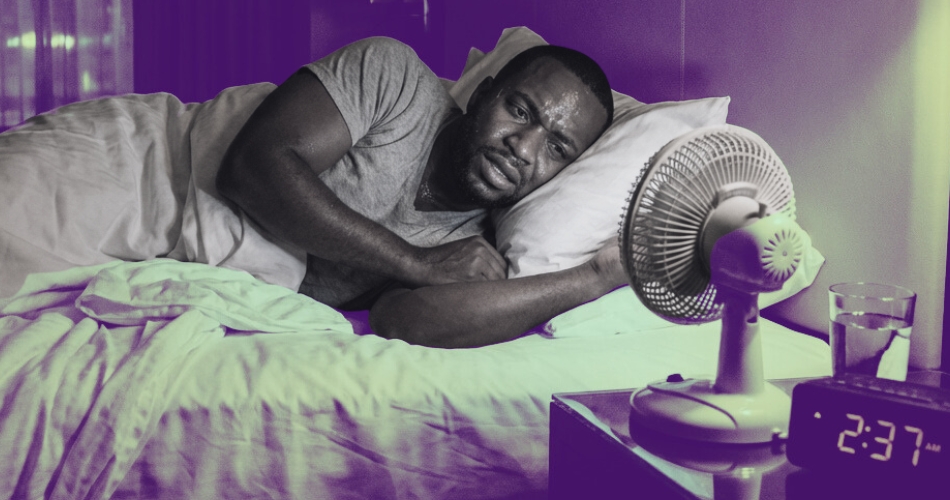
February 2026 has delivered a kind of weather whiplash that many people are still trying to process: record-breaking cold snaps in some regions, unseasonable warmth in others, and abrupt swings that defy what winter is supposed to feel like. This volatility is part of a broader climate pattern—and it carries health consequences that extend well beyond discomfort.
One of the most underrecognized impacts is sleep. As global temperatures rise, nighttime heat is increasing more rapidly than daytime heat in many parts of the world. That matters because sleep depends on cooling. When nights stay warm, the body struggles to do one of the most basic things required for restorative sleep: lower its core temperature.
Emerging research and recent reporting have begun to connect the dots. Climate-driven sleep disruption is not just an inconvenience—it may be quietly increasing cardiometabolic and cardiovascular risk, reframing climate change as a growing public health issue.
Why Sleep Depends on Temperature
Sleep is a biologically active process, not a passive shutdown. One of its key requirements is thermoregulation—the coordinated ability of the body to release heat.
To fall asleep and stay asleep, core body temperature must drop slightly. This cooling supports the transition into deeper stages of sleep, including slow-wave (deep) sleep and REM sleep. When ambient temperatures remain high, that cooling process is impaired.
Research shows that heat stress:
- Delays sleep onset,
- Increases nighttime awakenings,
- Shortens deep and REM sleep,
- Fragments the overall sleep architecture.
These effects are not evenly distributed. Deep and REM sleep—the stages most closely linked to metabolic regulation, memory consolidation, and cardiovascular recovery—are especially sensitive to thermal stress.
Climate Change Is Driving Hotter Nights, Not Just Hotter Days
While daytime heat tends to draw the most attention, climate data show that nighttime temperatures are rising steadily across much of the globe. Heat waves are increasingly defined by the absence of nighttime relief.
Urban environments intensify this effect. Concrete, asphalt, and dense housing trap heat during the day and release it slowly at night, creating urban “heat islands” that remain warm well after sunset. These conditions disproportionately affect people living in multi-unit housing, older buildings, or areas without reliable access to air conditioning.
The result is widespread population-level sleep deprivation, often unnoticed but biologically meaningful.
Why Poor Sleep Raises Cardiometabolic Risk
Sleep disruption is not benign. A large body of clinical research links poor sleep quality, especially fragmented or shortened deep sleep, with measurable cardiometabolic changes.
Chronic sleep disruption is associated with:
- Insulin resistance and impaired glucose regulation,
- Elevated blood pressure,
- Increased systemic inflammation,
- Appetite dysregulation and weight gain.
Over time, these changes increase the risk of type 2 diabetes, hypertension, obesity, atherosclerosis, heart attack, and stroke. Importantly, the risk is driven not only by sleep duration, but by sleep quality and continuity—both of which are undermined by nighttime heat.
Heat, Sleep Apnea, and Disordered Breathing
Sleep-disordered breathing adds another layer of concern. Recent reporting has highlighted evidence that warmer conditions may worsen symptoms of obstructive sleep apnea (OSA).
Heat can increase nasal congestion, promote discomfort-related arousals, and destabilize breathing patterns during sleep. For people with existing OSA, this may mean more frequent breathing interruptions and poorer overnight oxygen regulation.
OSA is already a well-established risk factor for hypertension, atrial fibrillation, heart failure, and stroke. If heat exacerbates sleep-disordered breathing, it may amplify cardiovascular risk in vulnerable populations—particularly as warming nights become more common.
Behavioral Responses to Heat Can Make Things Worse
Heat doesn’t just alter physiology; it also changes behavior, further disrupting sleep and metabolism.
People coping with hot nights often:
- Delay bedtime,
- Increase nighttime screen use,
- Alter meal timing,
- Reduce daytime physical activity due to fatigue,
- Experience irregular sleep schedules.
Each of these behaviors independently affects circadian rhythms and cardiometabolic health. Combined with thermal stress, they create a feedback loop: poor sleep leads to fatigue, which alters behavior, which further disrupts sleep.
Who Is Most Affected and Why
The health burden of nighttime heat is not evenly distributed. Older adults, low-income households, people living in dense urban housing, and individuals without access to air conditioning face greater exposure and fewer coping options.
These same populations often carry a higher baseline risk for cardiometabolic disease. Sleep disruption becomes an additional stressor layered on top of existing inequities, worsening health outcomes over time.
From a public health perspective, this intersection of heat, sleep loss, and chronic disease demands attention.
Climate Change, Sleep, and Chronic Disease Prevention
Public health frameworks have long focused on climate-related threats such as heat stroke, air pollution, and infectious disease. Sleep disruption is now emerging as another critical pathway linking climate change to long-term health.
Because sleep plays a foundational role in metabolic regulation, blood pressure control, and inflammatory balance, widespread sleep loss driven by environmental conditions could shape chronic disease trends for decades to come.
Integrating sleep health into climate and urban planning, alongside housing, transportation, and energy policy, may be essential for meaningful prevention.
What Can Be Done Individually and Systemically
On an individual level, practical steps matter:
- Prioritize a cool sleep environment when possible,
- Maintain consistent sleep and wake times,
- Use morning light exposure to support circadian alignment
- Recognize persistent sleep disruption as a health signal—not a trivial annoyance.
But individual strategies are not enough. Systemic solutions such as reducing urban heat islands, improving building standards, expanding access to cooling, and treating climate policy as health policy are critical.
Protecting sleep is not a luxury. It is a cornerstone of cardiometabolic and cardiovascular health.
Conclusion
Climate change is not only reshaping ecosystems and weather patterns. It is quietly undermining one of the body’s most essential restorative processes.
As nights grow warmer, sleep becomes more fragile. And as sleep suffers, cardiometabolic and cardiovascular risk rise. Recognizing sleep disruption as a climate-related health threat elevates its urgency and reinforces the need to protect healthy sleep as part of chronic disease prevention.
Sources
Journal of Physiological Anthropology
Environmental Research Letters
American Journal of Public Health


Discover What Grows Wealth with Minimum Effort & Minimum Risk

