
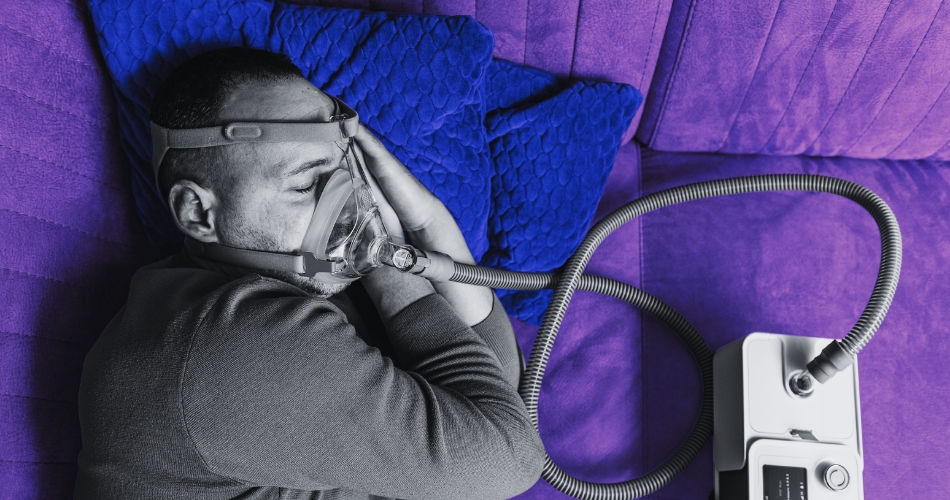
For years, sleep apnea has been framed primarily as a quality-of-life issue — the explanation for loud snoring, morning headaches, and persistent daytime fatigue. But that framing is rapidly changing. A growing body of cardiovascular research is forcing clinicians to reconsider sleep disorders not as nighttime nuisances, but as active drivers of heart and vascular disease.
Increasingly, sleep apnea, particularly obstructive sleep apnea (OSA), is being recognized as a condition that quietly stresses the cardiovascular system while patients sleep.
New research from Oregon Health & Science University (OHSU) adds to this shift, suggesting that sleep apnea may disrupt circadian regulation of blood vessel function, impairing overnight vascular repair. This matters because heart attacks and strokes occur disproportionately in the early morning hours, pointing to a period of heightened cardiovascular vulnerability that begins overnight.
This article explores how sleep apnea disrupts circadian biology, why nighttime cardiovascular risk may be rising, and how sleep disorders are being reframed as a core component of heart-disease prevention.
Sleep Apnea Is More Than Interrupted Breathing
Obstructive sleep apnea affects tens of millions of adults worldwide, yet it remains underdiagnosed. The condition is characterized by repeated collapse of the upper airway during sleep, leading to intermittent drops in oxygen levels and frequent micro-arousals. While these breathing disruptions are central to diagnosis, their downstream effects extend far beyond sleep quality.
Repeated cycles of oxygen deprivation trigger surges in sympathetic nervous system activity: the body’s “fight or flight” response. Over time, this contributes to chronic elevations in blood pressure, systemic inflammation, and metabolic dysfunction. Large population studies have linked sleep apnea to hypertension, atrial fibrillation, coronary artery disease, heart failure, and stroke.
As a result, organizations such as the American Heart Association and the National Institutes of Health now recognize sleep apnea as a contributor to chronic cardiovascular stress, not merely a cause of fatigue or snoring. The clinical conversation is shifting from “How tired is the patient?” to “What is happening to their heart and blood vessels every night?”
Circadian Biology and the Vulnerable Nighttime Heart
The cardiovascular system follows a circadian rhythm, which is roughly a 24-hour biological clock that governs blood pressure, heart rate, vascular tone, and endothelial repair. Under normal conditions, blood pressure dips overnight, heart rate slows, and blood vessels engage in restorative processes that help maintain flexibility and function.
This nightly recovery window is essential. The inner lining of blood vessels (the endothelium) repairs micro-injuries, regulates inflammation, and maintains healthy blood flow while the body rests.
Sleep apnea disrupts this process. Apnea-related oxygen drops and repeated arousals interfere with circadian signaling, keeping the cardiovascular system in a state of physiological stress when it should be repairing itself. Instead of entering a restorative phase, blood vessels may remain inflamed, constricted, and metabolically strained throughout the night.
This disruption helps explain a long-observed phenomenon: cardiovascular events peak in the early morning hours. Blood pressure rises rapidly upon waking, clotting factors increase, and heart rate accelerates just as vascular function may already be compromised from overnight stress.
What the New OHSU Research Adds
Recent research from Oregon Health & Science University advances this understanding by examining how sleep apnea interferes with circadian regulation of endothelial function. Rather than focusing solely on oxygen deprivation, the work highlights how disrupted circadian timing itself may impair blood vessel health.
The findings suggest that vascular dysfunction in sleep apnea is more pronounced overnight—the very period when repair should occur. This provides a plausible biological explanation for why people with untreated sleep apnea face higher risks of nocturnal and early-morning cardiovascular events.
Importantly, this research moves the field beyond correlation. For years, clinicians have observed that sleep apnea and heart disease travel together. Studies like this help explain why: sleep apnea appears to alter the timing and effectiveness of vascular recovery, leaving the cardiovascular system vulnerable at its most critical moments.
Clinically, this reframes treatment goals. Treating sleep apnea may protect the heart not only by improving oxygenation, but by restoring circadian-driven vascular repair.
From Fatigue to Prevention: How Clinical Thinking Is Changing
As evidence accumulates, cardiology and sleep medicine are becoming increasingly interconnected. Cardiologists now routinely screen for sleep apnea in patients with resistant hypertension, atrial fibrillation, heart failure, or unexplained cardiovascular risk. At the same time, sleep specialists are more attuned to the long-term vascular implications of untreated sleep disorders.
This collaborative shift reflects a broader change in preventive care. Sleep apnea treatment is no longer viewed as optional or secondary. It is increasingly considered alongside statins, blood-pressure control, glucose management, and lifestyle interventions as part of comprehensive cardiovascular risk reduction.
Professional organizations such as the American College of Cardiology and the American Academy of Sleep Medicine now emphasize the importance of identifying and managing sleep disorders as part of heart-health strategy—not simply symptom relief.
What This Means for Patients
For patients, this evolving science carries an important message: sleep symptoms can signal cardiovascular risk. Loud snoring, gasping or choking at night, morning headaches, unrefreshing sleep, and excessive daytime sleepiness are not benign inconveniences.
Sleep apnea frequently goes undiagnosed, particularly in women and older adults, whose symptoms may present differently than the classic stereotype. Fatigue, insomnia, mood changes, or subtle cognitive effects may mask underlying sleep-disordered breathing.
Effective treatments—including CPAP therapy, oral appliances, positional therapy, weight management, and targeted lifestyle changes—can reduce cardiovascular strain. Emerging evidence suggests that treatment may help normalize blood pressure patterns, reduce arrhythmia burden, and support vascular health over time.
Sleep health, in this context, is not optional maintenance. It is foundational prevention.
Sleep as Cardiovascular Preventive Medicine
Taken together, emerging research paints a clearer picture. Sleep apnea disrupts circadian biology, interferes with overnight vascular recovery, and increases cardiovascular vulnerability during the hours when the heart should be resting.
As science continues to clarify how sleep, circadian timing, and vascular health intersect, sleep medicine is becoming inseparable from cardiovascular prevention. Early identification and treatment of sleep disorders may represent one of the most actionable, and overlooked, opportunities to reduce heart-disease risk.
Conclusion
The heart doesn’t rest at night, and neither should prevention
When sleep disorders are treated only as fatigue problems, cardiovascular risk remains hidden. But as research reveals what happens to blood vessels overnight, sleep apnea is emerging as a central player in heart health.
The heart does not simply power down at night. Neither should prevention. Addressing sleep apnea may be one of the most effective ways to protect cardiovascular health while patients sleep.
Sources
Oregon Health & Science University
American College of Cardiology


Discover What Grows Wealth with Minimum Effort & Minimum Risk

